Travel to Ireland
Day 11 Cork, Cobh (269 Km.)
(in 111 Km.) Blarney Castle: Blarney Castle is a medieval fortress founded in the early thirteenth century, destroyed in 1446, and later rebuilt by Dermot McCarthy, king of Desmond. It is partially destroyed, remaining the tower of the tribute and some rooms. We advance through its gardens until reaching the tower, being able to enter its dungeons dug in the rock. At the top of it is the eloquence stone or Blarney stone. Visitors must kiss the stone leaned over backwards on the parapet´s edge and suspended in a vacuum and according to legend they will obtain the gift of the gab (great eloquence).
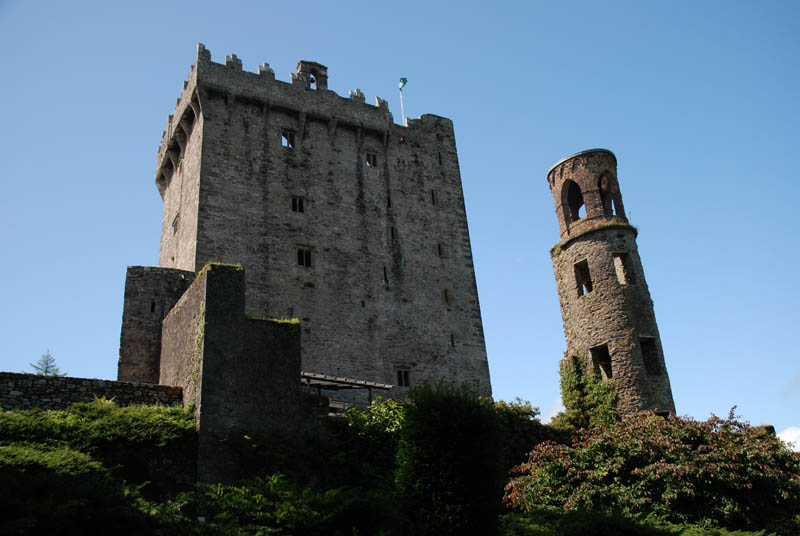
Blarney castle
Surrounding the castle are the gardens that contain different interesting points such as Druid´s Circle, Witch´s Cave and the Wishing Steps. As we leave the tribute tower we walk through the garden of poisonous plants. Still inside the gardens, next to a lake, is the Blarney House, a mansion renovated in 1874 in the Scottish stately style residence of the Colthurst family since the fifteenth century. Although the setting is very beautiful, this visit seemed extremely expensive. Likewise, the castle parking is also paid.
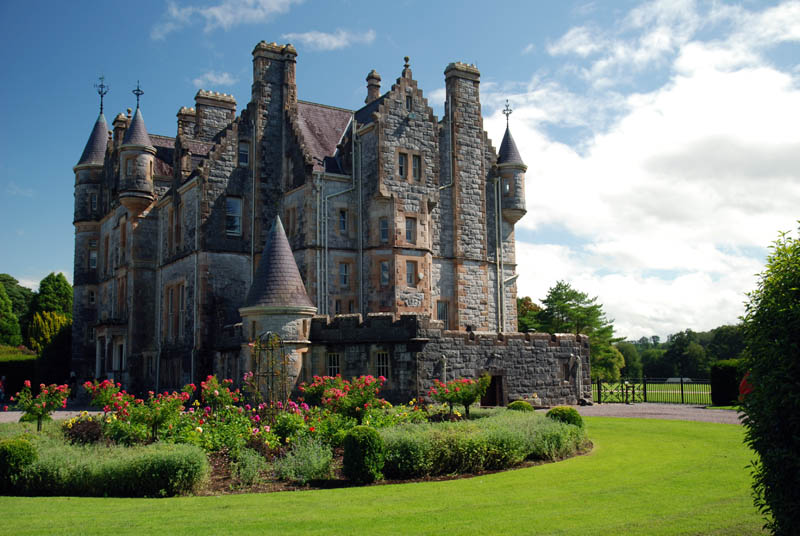
Blarney House
(in 10 Km.) Cork: Many buildings in this city are Georgian. The main street, St Patrick´s Street, was remodeled in 2004. Along its route, which is pedestrian in several sections, there are outstanding buildings. The adjacent Grand Parade is a tree-lined avenue, with offices, businesses and financial institutions. We take advantage of lunch time to go to the English Market, accessible from Grand Parade, St Patrick´s, Oliver Plunkett Street and Princes, a covered market where all kinds of food are sold. Although its origins date back to 1610, the current building dates from 1788.
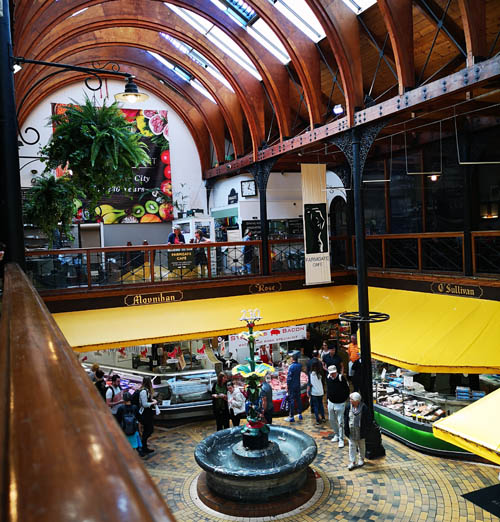
Cork - English Market
There are two cathedrals in the city: Cathedral of Saint Mary and Saint Anne, also known as St Mary´s Cathedral and North Cathedral, Catholic, and St. Finbar´s Cathedral, belonging to the Church of Ireland. After lunch we will visit the latter. There was a cathedral located on the current site before its reconstruction in the 18th century and there are still vestiges of its existence. The reconstruction began in 1865 and, still unfinished, was consecrated in 1870. It was completed in 1879 with the completion of the towers and their capitals. Burges, the architect of the reconstruction, donated an angel of copper and gold paper, placed on the pinnacle of the sanctuary.
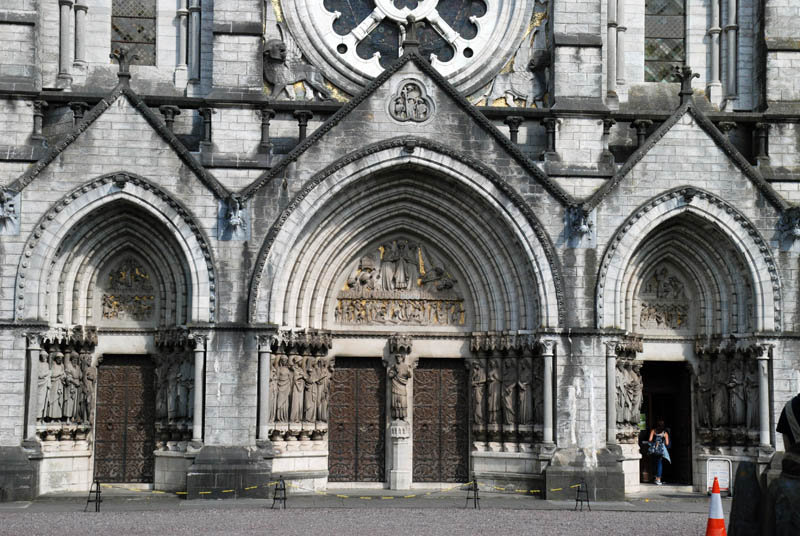
Saint Fin Barre´s Cathedral
We returned to the city center walking in front of the Elizabeth fort, the lively An Spailpín Fánac pub and the Beamish and Crawford’s Brewery. Once again on Grand Parade Avenue we look at the National Monument on the south side, a bell-shaped monument erected in 1906 that commemorates the rebellions of 1798, 1803, 1848 and 1867. Closer to the north branch of the Lee River we find the historic neighborhood of the Huguenots, which stands out for its narrow streets full of bars, restaurants and shops, and buildings such as the Crawford Art Gallery and the Cork Opera House, or on the left bank of the river the St Anne´s Church and the old Cork Butter Exchange.
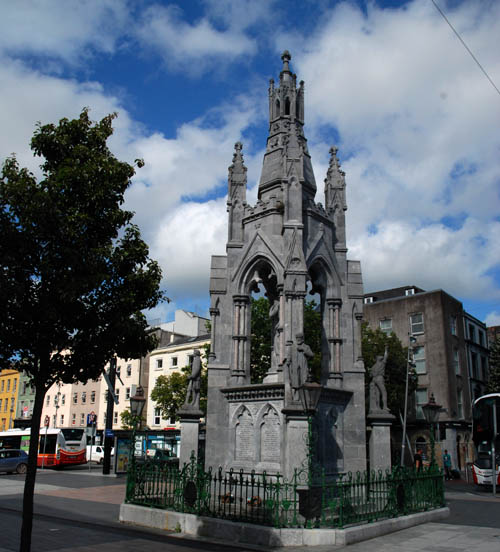
Cork - National Monument
(in 22 Km.) Cobh: The port of Cobh has an interesting maritime history, and is famous for the views of multicolored houses, called "Deck of Cards" and rooftops of the city. The tiny original wooden pier of the Titanic is preserved, as well as the offices of the White Star Line shipping company, whose building today houses a museum of the broken ship. On April 11, 1912, the then city became famous for being the last port of call of the RMS Titanic ocean liner before its sinking.
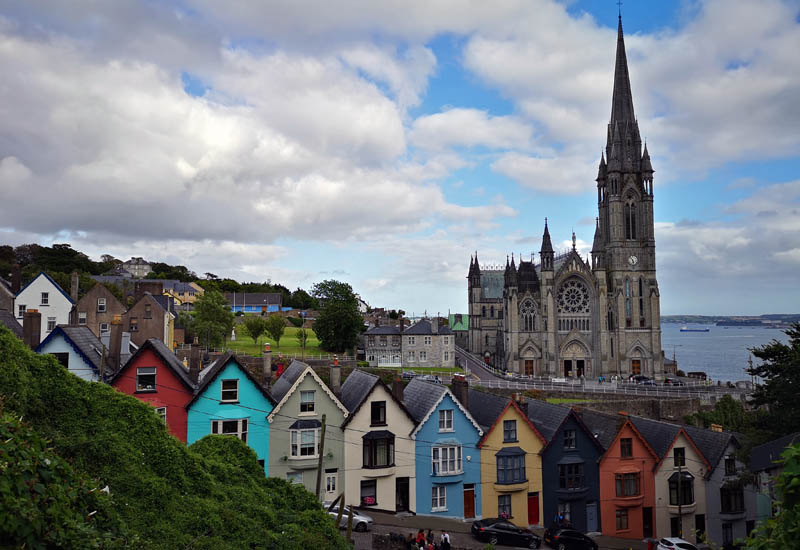
Cobh - "Deck of Cards" houses
The cathedral of saint Colman is the most important monument in Cobh. It is built in a place that stands out over the large number of colored houses that surround it, giving a vision of great plastic impact. This is one of the most photographed places in Ireland. The cathedral is one of the tallest buildings in Ireland. It is a neo-Gothic construction built between 1868 and 1915.
(in 126 Km.) Thurles: We overnight in this town near Cashel.